
Educational Consultant vs Agency: What Families Should Know
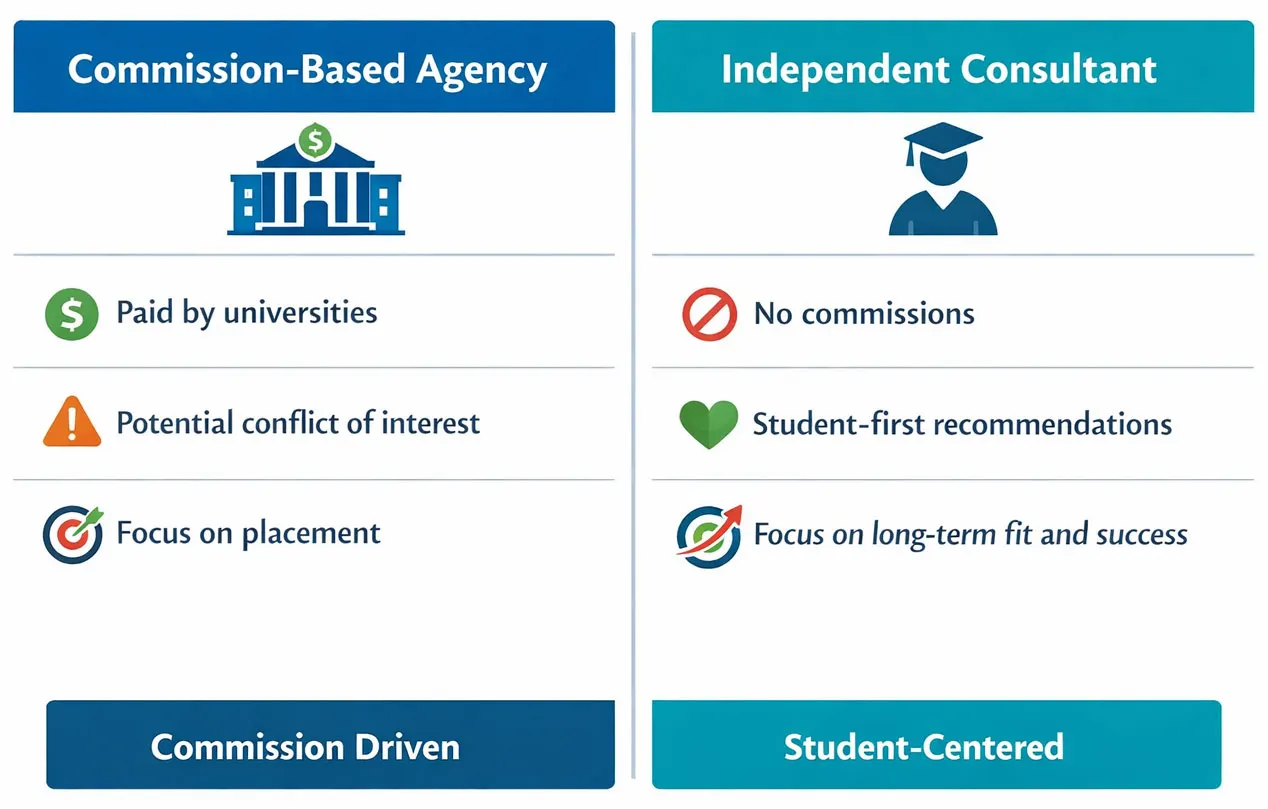
In Turkey, many “study abroad consulting agencies” operate on a commission-based model. This means they receive payments from the universities they place students into, which can create a conflict of interest. As a result, recommendations may not always be fully student-centered.
Independent educational consulting is fundamentally different.
At Admittance Education, we:
1. Do Not Accept Commissions
According to the ethical guidelines of the Independent Educational Consultants Association (IECA), independent consultants do not accept compensation from universities for student placement.
This helps ensure that recommendations are based solely on the student’s best interests.
2. Focus on the Right Fit
The goal is not just admission. It is finding a university where the student will thrive academically, socially, and personally.
3. Provide Personalized, In-Depth Guidance
Unlike school counseling systems, where counselors may work with hundreds of students, independent consultants build a deep understanding of each student and develop a long-term strategy.
4. Adhere to International Ethical Standards
We follow a student-first and ethical approach at every stage of the process. This means:
- We do not write essays on behalf of students
- We do not present misleading information
- We build the process around the student’s authentic identity
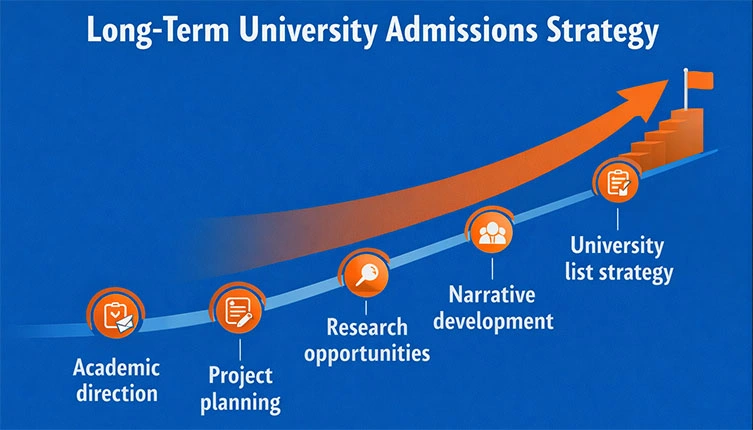
5. Develop a Long-Term Strategy
This is not just about the application year.
It is a multi-year process that can begin as early as 9th or 10th grade and may include:
- Academic direction
- Project planning
- Research opportunities
- Narrative development
- University list strategy
In Short
Agencies place students. Independent consultants build student potential.
Students who work with us increase not only their chances of admission, but also their likelihood of long-term success during and after university.